
Fluoroplastics are selected by application, not name
PTFE, PFA, FEP and PVDF are often discussed together because they are fluoroplastic materials used in chemical sealing and corrosion-resistant components. They are not interchangeable by default. Each material has its own processing route, temperature behavior, mechanical performance and chemical resistance range. A correct selection starts with the working medium and the actual shape of the part.
In chemical plants and chlor-alkali maintenance, fluoroplastics may be used for sealing rings, diaphragms, liners, hose assemblies, sleeves, molded parts and components with metal inserts. Some parts require compression sealing. Others require lining, welding, machining or hose assembly. The manufacturing method can be as important as the base material.
PTFE: broad chemical resistance with design limits
PTFE is widely reviewed for chemical sealing because of its chemical resistance and low surface adhesion. It can be compression molded, sintered, machined, rolled or used in lined structures. For sealing parts, engineers must review creep, compression behavior, sealing load and installation structure. PTFE does not behave like rubber, so it should not be selected only because the medium is corrosive.
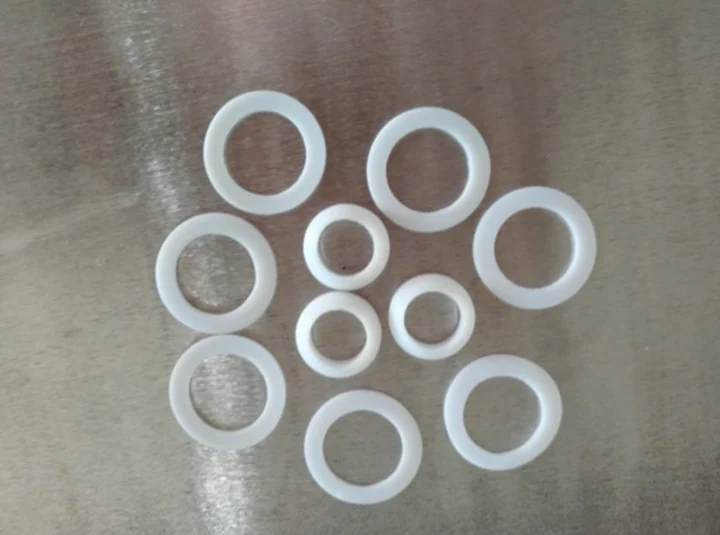
PTFE products may include sheets, rods, sleeves, sealing rings, diaphragms and custom machined parts. For plant maintenance, drawings and dimensions are important because PTFE parts often require controlled machining or forming. Related products are listed under fluoroplastic sealing products.
PFA and FEP: melt-processable options
PFA and FEP are melt-processable fluoroplastics. They can be useful when the product requires molding, welding, lining or flexible construction. PFA is often reviewed for components that require chemical resistance with melt processing. FEP may be considered in linings, tubing, films and other applications where its processing characteristics fit the design.
For hose and pipeline applications, the material review should include medium, temperature, pressure, bending condition, end connection and cleaning method. A PTFE hose assembly or fluoroplastic-lined connection should be quoted with both material and assembly information. The liner material alone is not enough to confirm suitability.
PVDF: mechanical strength and processability
PVDF may be reviewed where chemical resistance, mechanical strength and processing behavior match the service condition. It is not a universal replacement for PTFE, PFA or FEP. The application must be checked for medium compatibility, temperature limit, pressure and whether the part requires flexibility, rigidity or bonding with another material.
In custom sealing work, PVDF may appear in molded components, machined parts or composite structures. As with other fluoroplastics, final selection depends on drawing and service data. If the buyer already has a specified material, the quotation can follow it. If not, the supplier should review the application before suggesting a material route.
Processing method can decide whether a material is practical. A design that is easy to machine from PTFE may not be economical as an injection molded part. A welded or lined structure may require a material that can be processed with stable joint quality. If the part includes metal inserts, bolt holes, thin sections or sealing lips, the drawing should be reviewed before confirming the material and production route.
Dimensional tolerance also matters. Fluoroplastics can expand, shrink or deform differently during forming, sintering, cooling and machining. A buyer should not evaluate a fluoroplastic quote only by material price. It should also include the manufacturing process, inspection method, packaging method and whether the supplier has enough information to control the finished dimensions.
Selection factors for chemical sealing
- Medium and concentration where available
- Working temperature and cleaning temperature
- Pressure, vacuum or pressure cycling
- Part geometry, thickness and tolerance requirement
- Whether the part is molded, machined, welded, lined or assembled
- Sealing compression and mating surface condition
- Quantity, tooling requirement and delivery expectation
Connection with electrolyzer sealing
Fluoroplastic materials may also appear in chlor-alkali electrolyzer sealing products, especially where chemical contact resistance is important. However, many electrolyzer gaskets still require elastic sealing behavior, so rubber or rubber-plastic composite structures may be reviewed. The best technical basis is a drawing, a sample and the operating conditions, not only a material name.
For procurement, the safest request is not simply "PTFE part" or "PVDF part." The inquiry should describe where the component is installed, how it is compressed or connected, whether it contacts liquid or gas, and whether the part is expected to be rigid, flexible, machined, welded or lined. This information helps the supplier choose a realistic manufacturing route.